In the field of industrial lubricating materials,
ethyl silicone oil (CAS number 63148-61-8) has become an indispensable "hidden champion" in high-end manufacturing due to its unique molecular structure and excellent performance. As a type of polydiethylsiloxane organic silicon compound, the ethyl group in its molecular chain endows it with superior low-temperature fluidity and organic solvent compatibility compared to traditional methyl silicone oil, enabling it to maintain stable performance under extreme working conditions.
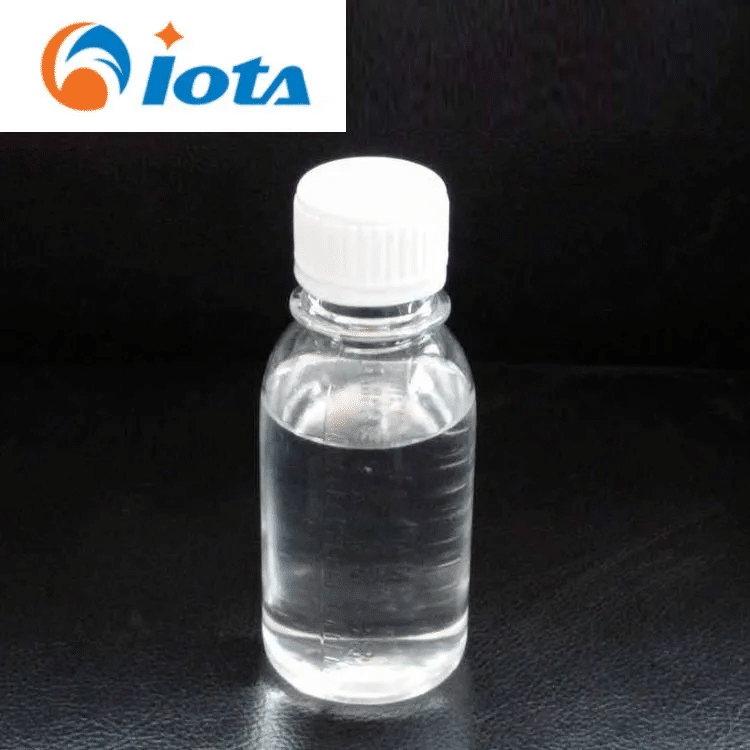
1、 Molecular Structure and Performance Advantages
The molecular formula of ethyl silicone oil is C ₄ₙ₊₁₂ H ∝₀₊₁₀ₙ Si ₙ₊₂ O ₙ₊₁, and its core structure consists of a silicon oxygen main chain and an ethyl side chain. Compared to methyl silicone oil, the introduction of ethyl groups significantly reduces intermolecular forces, giving it the following characteristics:
Low temperature adaptability: The solidification point is below -70 ℃, and it can work stably in a wide temperature range of -60 ℃ to 150 ℃, especially suitable for extremely cold areas or low-temperature starting equipment.
Lubrication durability: The viscosity changes little with temperature, is not easily volatile at high temperatures, does not solidify at low temperatures, and can maintain the integrity of the lubricating film for a long time.
Chemical stability: acid and alkali resistant, oxidation resistant, inert to most chemical media, suitable for corrosive environments.
Electrical insulation: With a volume resistivity of up to 10 ¹⁴Ω· cm and a breakdown voltage exceeding 20kV/mm, it is an ideal insulation medium for electrical equipment.
2、 Analysis of Industrial Application Scenarios
Precision mechanical lubrication
In the aerospace field, ethyl silicone oil is used for lubrication of high-precision transmission components such as satellite turntable bearings and missile servos. Its low volatility can prevent lubricant loss in vacuum environments, while its wide temperature range characteristics are suitable for extreme temperature changes in space. For example, the solar wing drive mechanism of a certain type of satellite uses customized viscosity (500cs) ethyl silicone oil to achieve 15 years of continuous trouble free operation.
electrical insulating materials
In high-voltage switches, transformers, and other equipment, ethyl silicone oil as an impregnating agent can effectively fill the micropores of insulation materials, increasing the breakdown strength by more than 30%. A certain ultra-high voltage transmission project adopts a modified ethyl silicone oil composite insulation system, which extends the equipment life from 20 years to 40 years and reduces operation and maintenance costs by 60%.
Release agent and surface treatment
In the rubber products industry, ethyl silicone oil release agent can achieve "one film, multiple uses", and a single coating can support more than 50 release cycles. After a certain automobile sealing strip production enterprise introduced this technology, the surface smoothness of the product improved by 2 levels, and the scrap rate decreased from 8% to 1.5%.
3、 Technological breakthroughs and industrial upgrading
In recent years, the ethyl silicone oil industry has achieved performance leaps through molecular design:
Nano modification technology: silica nanoparticles are uniformly dispersed in the matrix, increasing the load-bearing capacity of the lubricating film by 5 times and reducing the friction coefficient to below 0.02.
Fluorination modification: Introducing fluorine atom chain segments, we have developed an extreme environment specific oil product with a temperature resistance of up to 300 ℃, which has been applied in hydraulic systems of deep-sea drilling platforms.
Biobased route: Using bioethanol as a substitute for petrochemical raw materials to synthesize ethyl silicone oil precursor, reducing carbon footprint by 45% and meeting the green requirements of the EU REACH regulation.
4、 Market pattern and development trend
The global ethyl silicone oil market presents a "three legged" pattern: North America occupies 35% of the market share, mainly serving the aerospace and automotive industries; The Asia Pacific region leads with a growth rate of 32%, with emerging markets such as China and India becoming the main growth poles; Europe relies on its advantage in high-end manufacturing to maintain a market share of 25%.
In the next five years, the industry will present three major trends:
Specialization: Develop ultra pure and radiation tolerant products for scenarios such as semiconductor manufacturing and nuclear energy equipment.
Composite: Composite with materials such as polyether and fluorocarbon to expand applications in emerging fields such as 3D printing and flexible electronics.
Intelligence: Real time monitoring of lubrication status through IoT technology, promoting the transition from "regular maintenance" to "predictive maintenance".
As a "hexagonal warrior" in the field of industrial lubrication, ethyl silicone oil is breaking through performance boundaries through continuous innovation, providing key support for high-end manufacturing. With the acceleration of global industrial upgrading, its market value is expected to exceed 5 billion US dollars by 2030, becoming the fastest growing sub sector in organic silicon materials.